Games People Play

Event | February 28, 2024

Games People Play

Event | February 28, 2024

Games People Play

February 28, 2024

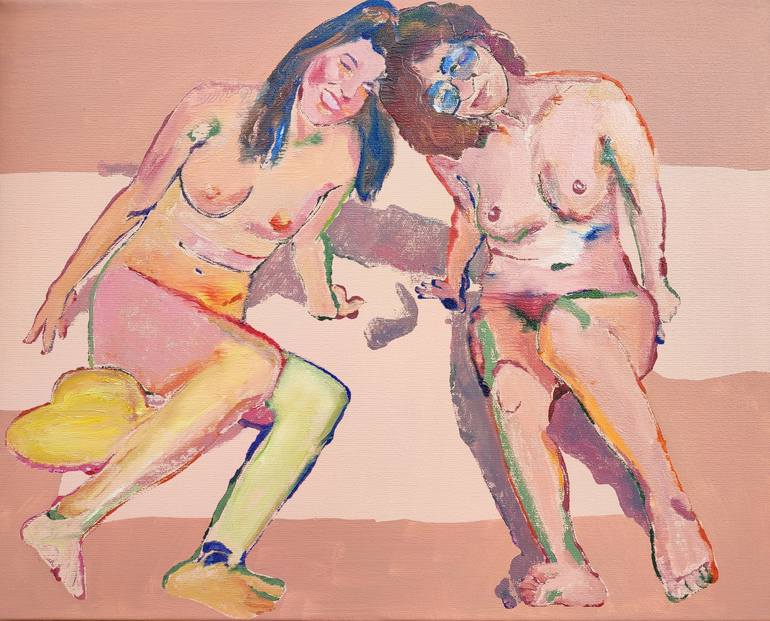
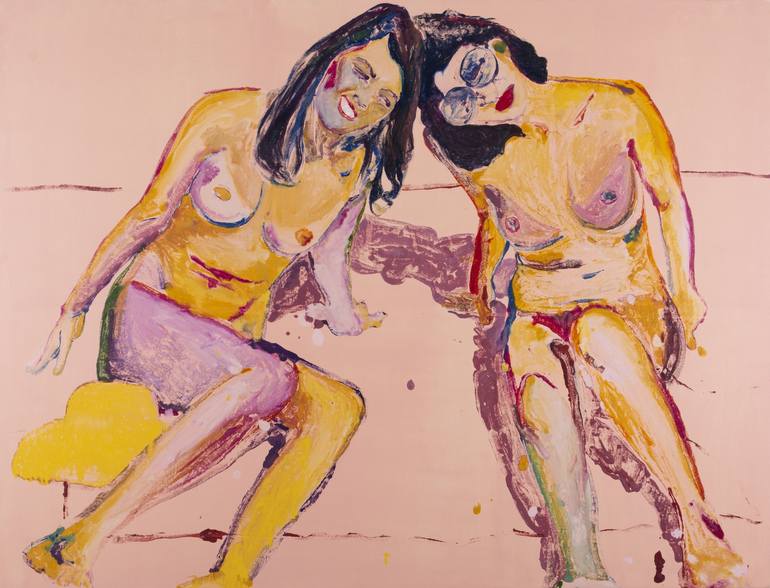
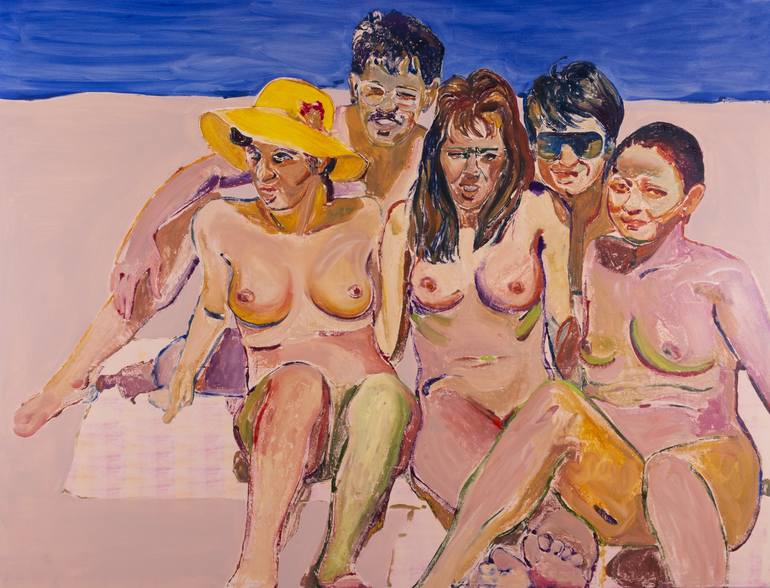
Taking her personal photographic archive as a reference point, from which she constructs a painting about nudity, nature, embracing the body, and ways of living, Roxana Ajder is one of the bravest artists of her generation.

Her painting develops extensive series of various formats in which the naked body is displayed with an almost disarming naturalness, while managing to animate the unsettling and not very usual space between innocence and indecency, purity and impudence. Adult human portraits (very few children in her paintings) with a youthful air and the natural appearance of beautiful silhouettes that seem to inhabit a summer paradise with ease, freely offer themselves to the viewer as “flesh and bone” comments on society, ethics, leisure practices, and modern sexuality.

Painting nude women and men on the beach and by the pool, Roxana Ajder combines the thread of familial affection with her personal foray into the visuality of the 1960s counterculture, which marked the mores and politics of the latter half of the last century, thus changing the world. Body practices and politics, feminine identity, moral codes, and the individual’s relationship with nature and the natural were fundamentally questioned, and society and art deeply metabolized the wave of change. In pairs or groups that highlight their relaxed connection to each other and to the welcoming context around them, Ajder’s naked bodies are smiling and tonic. Their status as images related to other images (here with photography) highlights their expressionist touch and the strange hint of violence, as intensity of life and mortality, both definitively present in every living body.

Roxana Ajder’s characters look at us as we look at them, and the construction of the images sometimes gives them monumental statures. They occasionally emerge in the foreground at the edge of the canvas, thus inviting the spectator into a familiar and common space, which he already intimately shares with the content of the painting, with its frontally displayed bodies and carnalities that respond to an undisguised visual pleasure (of painting, seeing, and being seen). Blues and ochres create the ambient fields of the canvases, divided between skies, sands, and masses of water according to an ancestral symbolism captured in the entire visual and imaginary universe of bathing in the history of art (the bathers, the Odalisques, women’s toilette, baptism), from which the artist’s painting indirectly claims descent. In Roxana Ajder’s work, attentive sensitivity to the primitive complements the ecofeminist substrate and the social and anthropological commentary on the human body, under an intensely autobiographical emotional imprint.
↳ artists

↳ curator

↳ schedule

Exhibition open 28.02 - 30.03
Wednesday to Friday from 3pm to 8pm
Weekends by appointment

this

Image

↳ details

Published on February 28, 2024 by Vlad Radulescu

↳ tags

and that

Image

↳ I Still Wonder
I Still Wonder November 19, 2025 How can we begin to understand failure as a constructive fall? Whether emotional, professional, psychological, physical or political, what if failure, and the uncertainty that comes with it, are approached as playful, even generative, grounds? As our inner and outer lives grow increasingly fragmented within an entangled reality, the pressure to succeed accelerates. Society...